
How Mobile Crushers Are Revolutionizing the Mining and Construction Industries
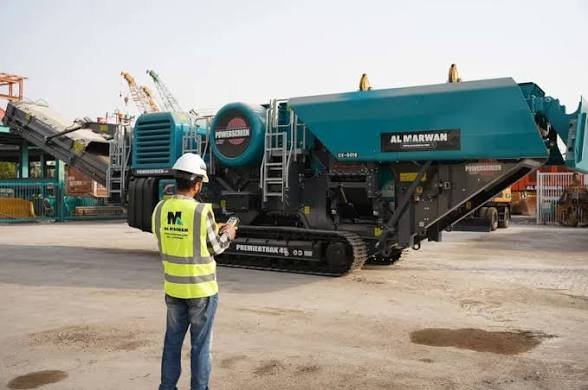
There has been a dramatic change in the way raw materials are treated in the past 10 years as a result of mining and construction projects. Rather than transporting stone, concrete and ore to a stationary crushing plant and mill several miles from the source, project teams now transport the crushing equipment directly to the material. A mobile crusher is a crushing plant that is built on wheels or crawler chassis to crush materials on the spot, such as granite, limestone, iron ore, recycled concrete, and dozens of other materials. The outcome is higher productivity in crushing on site, reduced transportation cost of material, and more flexible production process of aggregates of all projects.
Key Takeaways
- The mobile crusher plants can avoid the process of transporting raw materials to the fixed plant, reduce the time and fuel consumption.
- The wheel mounted units are suitable for road access sites, and the track mounted units are intended for applications such as quarries and mines with rough terrain.
- The capacities vary from 10 tonnes an hour for small operations to 500 tonnes an hour for large-scale ones.
- There are three major types of crushers: jaw, impact and cone crushers, and these are used in line with the hardness of the material and the desired output size.
- Strong performance in international projects has been confirmed in three countries—Philippines, Oman and Colombia—in real world case studies.
What a Mobile Crusher Plant Actually Does
A mobile crusher plant is not a unit. It is a standalone system of one or more chassis. This system consists of a vibrating feeder for controlling material flow, a primary crusher for large material size reduction, a vibrating screen to sort material and remove oversized material, and a conveyor belt to transport the finished product to a stockpile or directly to the truck.
All of the feeding, crushing, screening and conveying are accomplished in a single, continuous pass. If the material is too large it will be recycled back to the crusher for further screening. This closed loop process ensures minimal waste – and the end product is the correct size for the job.
The entire system is mounted on a chassis, making it easy to transport to a new location by truck and re-assemble in a few hours. Civil engineering work takes weeks to construct for a fixed plant. Mobile Plant arrives, levels and runs the same day.
Types of Mobile Crushers and How Each One Works
Mobile crushers are not all the same. The type to use will depend on the material being crushed and the desired end product.
Jaw Crushers
A mobile jaw crusher is a machine that has two plates, one stationary and the other mobile, and the large rocks are broken by compressing them between the plates. It is suitable for use with hard, abrasive materials such as granite, basalt and quartzite. Feed sizes of up to 1,500 mm are possible and output for coarse aggregate is possible down to approximately 15 mm with the correct settings. Jaw crushers are almost always used in the primary crushing stage in a multi-stage crushing line.
Impact Crushers
An impact crusher is a rock crushing machine in which crushing is achieved by means of material being thrown at the metal blow bars. This makes it more suited for softer to medium hard materials such as limestone, asphalt or recycled concrete. Impact crushers break rock in a manner that yields a more cubical, well-shaped end product that can be desirable for high-grade road base and concrete aggregate products.
Cone Crushers
A cone crusher consists of a concave bowl and a rotating mantle which crushes material into it. It is suitable for crushing media hard to very hard materials and is usually used after jaw crusher as secondary or tertiary crushing equipment. Cone crushers can produce a more uniform size of output, which is the correct choice when the output size of the finished product has to meet tight grading specifications.
Wheel-Mounted vs Track-Mounted: Which One Is Right for the Site?
There are basically two types of chassis configuration for mobile crusher plants, and it is important to select the right one before buying.
| Feature | Wheel-Mounted | Track-Mounted (Crawler) |
| Best site type | Flat, road-accessible locations | Rough, uneven, or remote terrain |
| How it moves | Towed by truck | Moves under its own power on tracks |
| Setup time | Quick, often within a few hours | Slightly longer, but still fast |
| Terrain flexibility | Limited to passable roads | Works in quarries, steep slopes, soft ground |
| Typical applications | Road construction, urban demolition | Mining, quarrying, remote projects |
A wheeled unit is easier and less costly to operate for a construction site having paved access and frequent travel between jobsites within a close proximity. Crawler tracks are used on a mining or quarrying site where there is no road access to move a machine wherever it is needed even though a wheeled machine would not be able to move it over the terrain.
Combination Configurations: Two, Three, or Four Units?
The amount of chassis also has an impact on the output quality and production scale of mobile crushing plant.
A three-combination plant is the one which incorporates the feeder, crusher and screen on the identical chassis. This is the easiest to set up, cheapest and most easy to run. It is suitable for small quarries and construction waste disposal, as well as locations where the material is not extremely hard and the finished product specifications are not stringent.
A four-combination option is an additional crushing machine that attaches to the single chassis to produce a finer output, typically a jaw crusher for coarse crushing and an impact or cone crusher to produce the finer output. It is suitable for medium-hardness materials and is able to give more uniform finished products, suitable for medium sized quarries and mines.
Two-combination plant is divided into two or more distinct chassis. The first unit is used for primary crushing and feeding, and the second is used for secondary crushing and screening. This setup is capable of feeding the biggest feeds and producing the highest tonnages, up to 500 tonnes per hour. It is ideal for high-volume aggregate supply in large quarries, large-scale mining and road construction projects.
Materials a Mobile Crusher Can Process
When considering the advantages of modern mobile crushing plants, one of the best features is the number of materials they can crush. It doesn’t have to purchase different equipment for various raw materials, as appropriate crusher type and settings can handle most common raw materials.
Typical materials processed are:
- Hard man made stone: Brick, Concrete
- Hard stone: granite, quartzite, diorite, pegmatite, dolerite, quartz, monazite, coarsely granitic rocks, porphyritic rocks
- Materials that can be recycled: concrete, asphalt, bricks, tiles etc.
- Selling ores: iron ore, copper ore, coal, gold ore
The industrial minerals consist of gypsum, talc and calcite.
The crucial point to obtaining the correct results is to match the type of material to the type of the crusher. Hard rock is fed to a jaw and/or cone crusher. Recycled concrete and asphalt are most suitable for impact crusher. Some soft minerals such as gypsum can be crushed by hammer or impact crusher without the machine wear quickly.
Real-World Case Studies
A mobile crusher plant in action, on a job site, is the best way to know what to expect rather than any technical specification sheet.
It is worth noting that a 50 tonne per hour mobile stone crushing plant was installed for a quarry project in Cebu, Philippines. This gave the team the flexibility of being able to relocate the unit to another working face as the quarry increased in size during the campaign, with no significant downtime for relocations.
The mobile plant has been installed in Oman to crush limestone, with an 80 tonne per hour capacity. The limestone was a much softer rock which can be efficiently crushed using impact crushers, and the limestone product has been directly used in road base production, avoiding the need to obtain aggregate from other sources.
The 250 tonne per hour mobile stone crusher plant was ordered for Colombia by www.uniquemacglobal.com. The larger two-combination setup was selected to address the high-volume demand for aggregates in the project while the crawler-mounted equipment provided access to terrain that would not have been available to wheeled equipment.
In Honduras a 30 tonne per hour mobile jaw crushing and screening plant incorporating a PE 300×500 jaw crusher was commissioned for a smaller scale project. The client commented that the output was very good and setup was quick on arrival and very easy.
These cases are spread across continents, materials and output demands, demonstrating the versatility of mobile crushing technology to international construction and mining projects.
Why More Projects Are Choosing Mobile Crushing Over Fixed Plants
There is a legitimate role for fixed crushing plants, especially in those large, long term quarry operations where the plant will remain in place for several years. However, the mobile plants have gained considerable market share for a number of practical reasons.
No transportation of raw materials: Having a stationary plant, workers excavate the rock, load it into trucks and then transport it to the plant. The mobile plant moves to the material with the crusher. On a big construction site, this could save these costs by a substantial margin.
Faster project start: Civil works, concrete foundations and sometimes weeks of preparation are needed for a fixed plant. A mobile plant can be up and running, within hours of being delivered to site.
Improved utilization of recycled material: Concrete, rubble and asphalt from construction and demolition sites are substantial waste volumes which would otherwise end up in landfill. On-site processing can be achieved by the mobile impact crusher, which is able to produce the aggregate directly used in the new project. This not only cuts down on waste disposal expenses, but also the price of virgin aggregate.
Flexibility across projects: Multiple ST projects can be operated with one mobile plant, instead of purchasing fixed equipment for each location. This means that using a mobile crusher is an investment for a long period of time as opposed to investing in one thing only to use for a short time.
Selecting the Right Mobile Crusher: Key Questions to Answer
Before buying or renting a mobile crusher plant, a project team should be clear on the following:
- What are the material being crushed and what is its hardness on the Mohs scale?
- What is the size of the feed to be given and what is the required output size?
- What is the project’s required rate of tonnes per hour?
- What will the frequency be for the plant to move and what type of ground will it operate on?
- Is the power source available diesel, electric or combination?
- What are the noise and dust limitations in the area?
When buying a machine it is important to answer these questions honestly, so that an oversized machine is not purchased for a small site or a machine that is too small for a large project.
Frequently Asked Questions
What are the differences between mobile jaw crusher and mobile impact crusher?
A jaw crusher is a hard, abrasive material that breaks a hard, abrasive material such as granite and basalt by crushing it between two plates. An impact crusher is a high-speed impact crushing machine that is suitable for crushing softer materials such as limestone and recycled concrete. Impact crushers also produce a well shaped particle, which is more cubical.
Is it possible for a mobile crusher to crush demolition concrete with recycled concrete?
Yes. Mobile impact crushers are especially suitable for recycling concrete, asphalt and brick from demolition sites. The product can then be used again as a road base or fill, thus saving on landfill expenses and new aggregate purchases.
What is the time for mobile crusher plant to set-up on a new site?
Once the mobile plants are in place most can be operational within a few hours. Units towed by trucks are typically towed in leveling and connection positions, whereas track-mounted crawlers can level and connect and start operating the same day.
How much capacity will be required for my project?
The number of tonnes of finished material required per day, and the hours of operation are variables that will influence the capacity required. Plants can be found from about 10 tonnes per hour up to 500 tonnes per hour for small sites and large mining and quarrying operations.
What is the best place to purchase mobile crusher plants that have after sales in the world?
Zhengzhou Unique Industrial Equipment Co., Ltd (Zeheng) was established in the 1980s, and is a manufacturer and supplier of mobile crushing plant. Zeheng has been in business for over 30 years and has participated in projects in the Philippines, Oman, Sri Lanka, Colombia and Honduras etc. They can process feeds as large as 1500 mm and in production rates from 10 to 500 tonnes per hour on both wheel mounted and crawler mounted models.
Final Thoughts
Mobile crushing technology makes it feasible for construction and mining companies to crush material at precisely the right size, at the exact place it is needed, and departing the site without having to invest in and deploy a stationary plant for the work. From crushing granite at the quarry face, to processing concrete in demolition sites for re-use, to extracting mineral ore in a remote area, there is a mobile crusher configuration for every application.
Knowing the various types of jaw crushing plants, impact crushing plants, cone crushing plants, wheel mounted crushing plants, crawler tracked crushing plants, and understanding the differences between the different plant types, as well as knowing the difference between two, three and four combination crushing plants, allows one to precisely match the equipment to the project requirement, rather than purchasing more machine than the requirement or less than the machine can handle.